
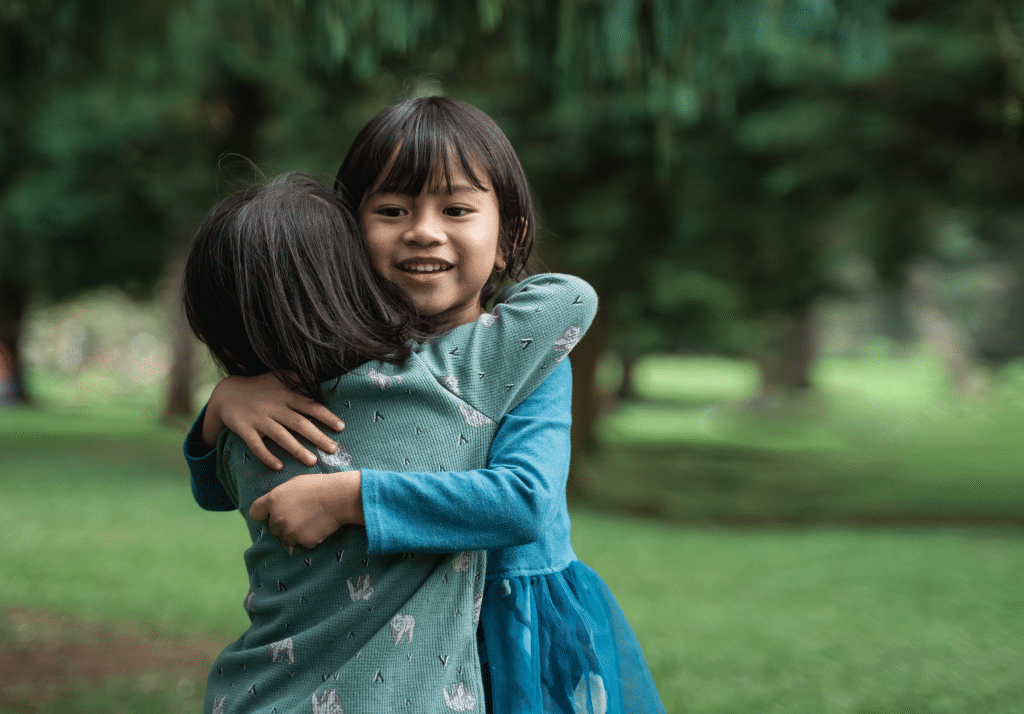
Whether it’s an argument with a sibling or hurt feelings by a friend, children experience many tough moments in their relationships. How they respond matters, and these experiences are great teaching moments, especially when it comes to forgiveness. Forgiveness is a foundational value of the Catholic faith. It’s also a core part of empathy. Here’s how you can talk to your children about the importance of forgiveness:
Forgiveness as a Gospel Value
Forgiveness is at the heart of our faith. Just as God forgave us for our sins, we are to forgive others for their transgressions against us. Remind your child of this by reciting the Lord’s Prayer with them, where we ask God to forgive us as we forgive others. Reflect on the many Bible stories about forgiveness, especially the Gospel of Jesus. Help them understand that because God forgives us so generously, we are called to forgive others just as willingly.
The Link Between Forgiveness and Empathy
A huge part of being able to forgive somebody is seeing the situation through their eyes, and that takes a tremendous amount of empathy. Ask your child questions like “How do you think the other person was feeling in that situation? and “Why do you think they did or said that?” Explain to your child that chances are, the other person didn’t set out to hurt them. People act out of sadness, frustration, fear or even hurt. Having the empathy to understand the other person’s perspective doesn’t excuse what they did, but it does make it easier to let go of anger and move toward forgiveness.
What Forgiveness Looks and Feels Like
Forgiving someone doesn’t mean pretending what they did didn’t hurt or simply saying the words “I forgive you.” It’s about understanding that your hurt feelings are valid, processing them and letting go of resentment. Remind your child that forgiving is an active decision, not something that happens automatically. Let them know that it can take time, and that it’s okay if they can’t forgive someone right away. Also explain to them that after they forgive somebody, it’s important to release the situation and the feelings attached to it. Walking them through practical steps can help, like:
- Name what you’re feeling and why.
- Think about what the other person may be feeling.
- Give yourself time to let go of the hurt feelings.
- Say “I forgive you” when you’re ready.
- Move forward in a positive way.
Asking for Forgiveness
Forgiveness goes both ways, and children need to be as readily able to ask for forgiveness as they are to forgive others. Throughout their lives, children will make mistakes. Sometimes, these mistakes will hurt others. Teach them to take responsibility for their actions and offer a sincere apology. Help them understand that saying what they did, how it affected the other person and how they want to make it right are of utmost importance when asking for forgiveness. Remind your child that they may not hear “I forgive you” right away, and that it can sting, but it’s important to give the other person time if they need it, just as they might need time if they were the one who got hurt.
Modeling Healthy Forgiveness at Home
Just as forgiveness is a huge part of having empathy, it also plays a big role in conflict resolution. Children can learn conflict resolution, empathy and forgiveness by watching the people closest to them interact. Whether at home or with other family members, make sure your child sees you apologize for mistakes and forgive others when they make mistakes. Saying sorry and accepting apologies are a healthy part of family life. You can even pray as a family for those you have hurt and those who have hurt you. Forgiveness and prayer are beautiful ways of living out Jesus’s teachings.
Forgiveness is a tender subject, but it’s also one of the greatest gifts you can teach your child. It helps them build strong relationships, develop empathy and have a peaceful heart. At our Orlando Catholic school, we teach students to embody the Gospel values, showing love and extending forgiveness to others as God does graciously for us. St. Charles Borromeo is dedicated to proclaiming the Gospel message of Jesus Christ, and we want our students to grow into kind, moral individuals who contribute positively to their communities. Learn more about our mission here or contact us online here.