
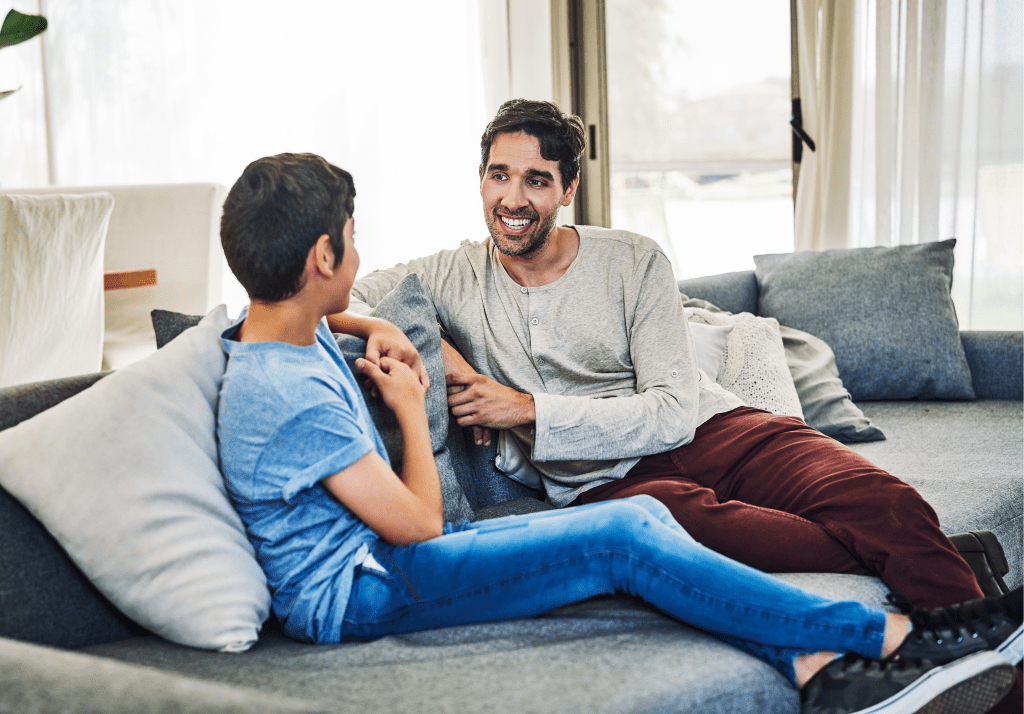
Strong communication is one of the most valuable skills you can teach your child, as it shapes everything from friendships and academic success to how they interact with their faith. Home is the perfect place to start practicing and building these skills. Through simple everyday moments, you can help your child learn to express themself clearly, listen actively and respond with empathy. Here’s how parents can teach communication skills at home:
Using Verbal Communication
Clear verbal communication means being able to put thoughts and feelings into words. Encourage your child to speak in full sentences, use “I feel” statements and explain their thinking instead of simply answering yes or no. Practice during everyday conversations, at the dinner table, in the car or while working through a conflict. Ask open-ended questions like “How do you feel about that?” and “Can you tell me more?” In order for children to learn to use their words, they must first learn to reflect on and process their own thoughts. These conversations are a great starting place.
Reading Nonverbal Cues
Communication extends far beyond the words we speak. Facial expressions and body language can convey just as much or even more than what we say out loud. Help your child read nonverbal cues by using them yourself. Instead of just saying “yes” or “no,” try nodding or shaking your head. Small gestures like this help your child attach nonverbal cues to the meaning behind them. You can also talk them through it. For example, as you’re watching a TV show, ask questions like “Did you notice that the character crossed her arms when she said that? Why do you think she did that?” Before you know it, picking up on nonverbal cues will become second nature to your child. More importantly, they’ll become more aware of their own body language and what it communicates to the people around them.
Actively Listening
Listening is one of the most important aspects of communication. Active listening is a skill that takes practice. Start by teaching your child to give their full attention while someone is talking, putting down distractions, making eye contact and waiting for their turn to speak rather than interrupting. Encourage them to show that they’re listening by nodding—which helps them further understand and practice nonverbal cues—asking follow-up questions or repeating what they’re hearing inside their head. Model this behavior yourself during interactions with your child, as children often replicate the behavior of the adults around them.
Responding with Empathy
The ability to respond with empathy while communicating is one of the strongest skills that will help your child form meaningful connections built on trust and respect throughout their lives. Encourage your child to think about how the other person might be feeling before they respond. Teach them the importance of responding with kindness and understanding, rather than judgement or defensiveness. In your conversations with your child, phrases like “I can see why you feel that way” teach children to validate others’ emotions before jumping to express their own. It also teaches them an important aspect of conflict resolution. On top of that, helping your child practice empathy gives them a real-life way to share God’s love with others, which is a founding principle of the Catholic faith.
Communication is a skill that grows with practice and patience, and you can help your child be a strong communicator by making the most of everyday conversations. St. Charles Borromeo is an Orlando private school located in the Catholic Diocese of Orlando that is committed to proclaiming the Gospel Message of Jesus Christ. We believe in teaching the whole child and want students to love learning, helping them grow into well-rounded, contributing members of society. Learn more about us by visiting our website or contacting us here.